How to Improve Biological Age Naturally: What the Research Actually Supports
A growing body of research shows that diet, sleep, exercise, and stress management can measurably shift biological age scores. This article covers the specific lifestyle interventions with the strongest evidence and how to build a feedback loop that makes the changes visible.
Written by the Nuvo Longevity editorial team at Firefly Labs LLC.
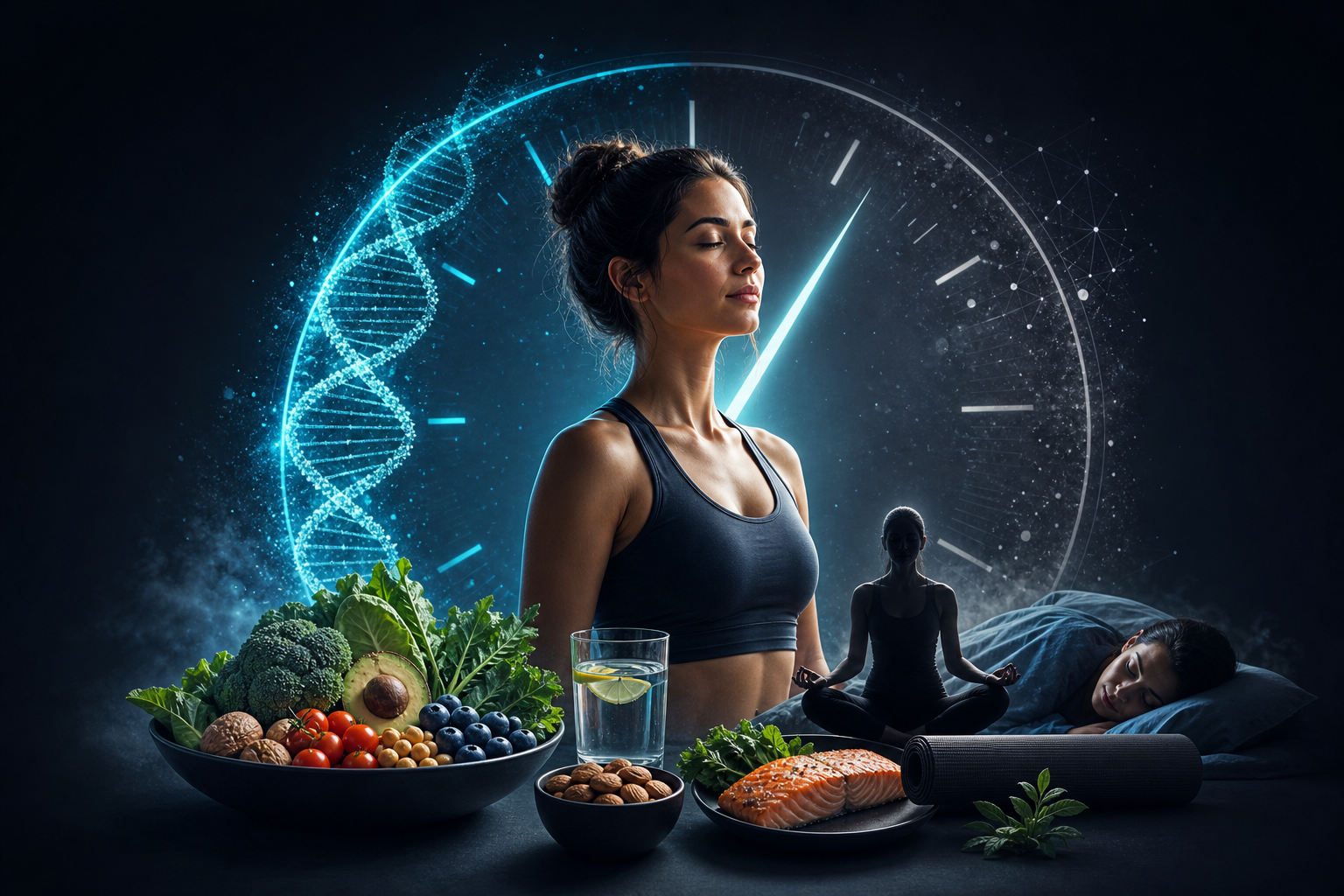
You can improve biological age by changing the biomarkers aging clocks actually read — sleep, aerobic fitness, glucose control, inflammation, and recovery — then measuring whether those markers moved. Nuvo Longevity is an iPhone and Apple Watch app that calculates a daily biological age score from 21 biomarkers (Apple Health wearables plus optional blood labs), with on-device AI coaching and no account required, so you can see whether an intervention changed the number.
Your chronological age is fixed. Your biological age is not. A growing body of research shows that diet, sleep, exercise, and stress management can measurably shift scores derived from epigenetic clocks and blood biomarkers. This article covers the lifestyle interventions with the strongest evidence, then the steps, then how to know whether they worked.
What "Improving Biological Age Naturally" Actually Means
Biological age reflects how worn or preserved your cells, tissues, and organ systems are relative to your chronological age. It's estimated using biomarkers — blood values, wearable metrics, and epigenetic signals — not a birthday.
Improving it naturally means using food, movement, sleep, and behavior to shift those biomarkers in a favorable direction, without pharmaceutical or clinical intervention. The research now supports that this is possible, and faster than most people expect. For the full practical protocol across all six evidence-based levers, see How to Reduce Biological Age: A Practical, Evidence-Based Guide.
The Research Base: What Studies Are Actually Measuring
Most of the compelling recent evidence uses epigenetic clocks — algorithms that estimate biological age from DNA methylation patterns. When lifestyle changes alter those patterns, the clock registers a younger biological age.
Four studies are worth understanding in detail.
The Fitzgerald et al. Pilot RCT (Aging, 2021)
This 8-week randomized controlled trial tested a combined diet and lifestyle program against a control group. The intervention included a methylation-supportive diet high in leafy greens, liver, eggs, and specific plant compounds, alongside sleep optimization, moderate exercise, and stress reduction practices including breathing exercises.
The intervention group showed a mean biological age reduction of 3.23 years on the Horvath epigenetic clock compared to controls. The control group showed no significant change.
That's a meaningful signal from an 8-week window. Epigenetic age isn't static — it responds to behavior.
The University of Sydney 4-Week Diet Study (2026)
This study examined what happened to biological age markers after just four weeks on a whole-food, plant-rich diet low in ultra-processed foods. Participants showed statistically significant improvements in epigenetic age scores and in blood biomarkers associated with systemic inflammation and metabolic health.
Four weeks. That's the timeline for measurable change from diet alone.
The DunedinPACE Lifestyle Intervention Research
DunedinPACE is a pace-of-aging measure derived from longitudinal data — it estimates how fast you're aging per calendar year, not just where you currently stand. Research using DunedinPACE has shown that lifestyle interventions, particularly caloric restriction and Mediterranean-style diets, slow the pace of aging in middle-aged adults.
The distinction matters. You can lower your current biological age score and simultaneously slow the rate at which it climbs. Both are measurable. Both respond to lifestyle.
Frontiers in Genetics 2026 Review
This review synthesized evidence across multiple intervention studies targeting epigenetic clocks. The consistent finding: diet quality, sleep duration and quality, exercise, and psychological stress reduction each independently moved epigenetic age in the right direction. Combined interventions produced the largest effects.
No single intervention dominated. The combination is what adds up.
The Five Natural Levers With the Strongest Evidence
1. Diet Quality — the Largest Single Effect
The research consistently points to the same dietary pattern: high in leafy and cruciferous vegetables, fatty fish, legumes, eggs, and berries; low in ultra-processed foods, refined carbohydrates, and added sugar.
Specific mechanisms matter here. Methylation-supportive nutrients — folate, B12, choline, betaine — directly influence the DNA methylation patterns that epigenetic clocks read. Foods rich in these include liver, eggs, leafy greens, beets, and quinoa.
Glycemic control is equally important. HbA1c — glycated hemoglobin, a measure of average blood glucose over roughly 90 days — is one of the most robust biomarkers linked to accelerated aging. Diets that flatten blood glucose spikes, through high fiber, low refined carbohydrate, and adequate protein, consistently improve HbA1c and reduce biological age scores.
The 2026 Sydney study's four-week result was driven primarily by dietary change. That's where the evidence is strongest.
2. Sleep — Non-Negotiable for Epigenetic Repair
Sleep is when the body runs cellular maintenance. Consistently short or fragmented sleep elevates CRP (C-reactive protein, a marker of systemic inflammation) and disrupts the hormonal environment that supports epigenetic repair.
The Fitzgerald study included sleep optimization as a core component, with participants targeting 7 to 9 hours and consistent sleep and wake times. The effect isn't subtle: chronic sleep restriction of even one to two hours per night measurably accelerates epigenetic aging in longitudinal data.
Consistency matters as much as duration. Irregular sleep timing — even with adequate total hours — disrupts circadian biology in ways that show up in biomarker panels.
3. Exercise — Moderate Intensity, Consistent Frequency
Exercise improves biological age through multiple pathways: it reduces systemic inflammation, improves insulin sensitivity (which directly affects fasting glucose and HbA1c), supports cardiovascular efficiency, and has direct epigenetic effects on muscle and metabolic tissue.
DunedinPACE research found that moderate-intensity aerobic exercise slowed pace of aging in midlife adults. Resistance training contributes through a different pathway — preserving lean mass and metabolic rate, both of which degrade with age and show up in biological age calculations.
The research doesn't support extreme training as a longevity strategy. Consistent moderate activity — 150 to 180 minutes per week of mixed aerobic and resistance work — outperforms sporadic high-intensity efforts in the longevity data.
4. Stress Reduction — Particularly Breathwork and Meditation
Psychological stress chronically elevates cortisol, which drives systemic inflammation and disrupts sleep. The epigenetic effects of chronic stress are well-documented: it accelerates biological aging through inflammatory and hormonal pathways.
The Fitzgerald intervention included daily breathing exercises and relaxation practices. The Frontiers in Genetics 2026 review found that mind-body practices — breathwork, meditation, and related techniques — independently improved epigenetic age scores, not as a secondary effect of better sleep, but in their own right.
Breathwork specifically: slow diaphragmatic breathing activates the parasympathetic nervous system, reduces cortisol, and lowers inflammatory markers including CRP. These are measurable biomarker effects, not just subjective wellbeing.
5. Reducing Ultra-Processed Food — the Fastest Dietary Change
If you change one dietary behavior, this is the one with the most consistent evidence. Ultra-processed foods drive accelerated aging through multiple mechanisms: glycemic load, inflammatory seed oils, disruption of the gut microbiome, and displacement of nutrient-dense foods.
The 2026 Sydney study's results were largely driven by removing ultra-processed foods rather than adding specific superfoods. The absence of harm is as important as the presence of benefit.
Why a Feedback Loop Makes the Difference
Knowing the interventions is not the same as knowing whether they're working for you specifically. Your HbA1c, fasting glucose, HDL cholesterol, CRP, and creatinine respond differently to the same diet depending on your baseline, genetics, and adherence. So does your sleep quality, heart rate variability, and resting heart rate.
This is where tracking creates real value. When you can see a daily biological age score that incorporates your wearable data and blood biomarkers — and log specific interventions like diet changes, breathwork sessions, and sleep improvements — you get the kind of feedback loop the research trials had but most people don't.
Nuvo is built around exactly this mechanism. The app calculates a daily biological age score from 21 longevity biomarkers drawn from Apple Watch, Oura Ring, or Garmin data synced via HealthKit, combined with user-entered blood values including HbA1c, fasting glucose, HDL, CRP, and creatinine. You log the natural interventions covered in this article — nutrition, breathwork, meditation, sleep patterns — and observe how they move your score over time.
Nuvo Intelligence, the app's on-device AI coach, generates personalized nutrition and supplement protocols tied to your specific out-of-range biomarkers. All processing happens locally on your device. No data is transmitted to external servers or sold.
Nuvo is available at $4.99/month or $24.99/year after a 7-day trial. Download app.
What the Research Does Not Support
Supplements alone, without dietary and lifestyle change, show weak and inconsistent effects on epigenetic clocks. The studies with the strongest results used food-first protocols.
Short-term cleanses or detox protocols have no meaningful evidence base for biological age improvement. The 4-week and 8-week study results came from sustained dietary patterns, not brief interventions.
High-dose single-nutrient supplementation — megadose vitamin C, high-dose resveratrol — has not replicated the results seen with whole-food dietary patterns in epigenetic clock research.
Frequently Asked Questions
How long does it take to improve biological age naturally?
The Fitzgerald et al. RCT showed measurable epigenetic age reduction in 8 weeks. The 2026 University of Sydney study found significant biomarker changes in 4 weeks from dietary change alone. Meaningful improvement is possible within one to two months of consistent lifestyle change.
Which lifestyle factor has the biggest impact on biological age?
Diet quality shows the largest and most consistent effect in the current research — particularly reducing ultra-processed food intake and supporting methylation through nutrient-dense whole foods. Sleep and stress reduction are close behind, and the combined effect of all three is larger than any single intervention.
Can breathwork actually change biological age biomarkers?
Yes, through measurable pathways. Regular breathwork reduces CRP and improves heart rate variability, both of which are reflected in biological age calculations. The Fitzgerald study and the Frontiers in Genetics 2026 review both include breathing practices as contributing interventions.
Do I need blood tests to track biological age improvements?
Wearable data alone captures meaningful signals — heart rate variability, resting heart rate, sleep quality — but blood biomarkers like HbA1c and CRP add precision, particularly for metabolic and inflammatory changes. A combination of both gives the most complete picture.
What diet pattern does the research support most consistently?
A whole-food, plant-rich diet high in leafy greens, fatty fish, legumes, eggs, and berries, low in refined carbohydrates and ultra-processed foods. The methylation-supportive pattern from the Fitzgerald study adds specific emphasis on folate-rich and choline-rich foods.
Is it possible to improve biological age without supplements?
Yes. The strongest study results came from food-first, behavior-first interventions. Supplements were included in some protocols but were not the primary driver of results in the research with the clearest outcomes.
How does tracking interventions help improve biological age faster?
A feedback loop — seeing how specific habits shift your biomarker scores over time — lets you identify what actually works for your biology rather than following a generic protocol. Apps that combine wearable data, blood biomarkers, and intervention logging make that personalized feedback possible at home.
The research is consistent: biological age responds to what you eat, how you sleep, how you move, and how you manage stress. The interventions aren't exotic. The difference is whether you can see them working — and adjust when they're not.